100% Cotton Fabric: How to Tell Real Cotton from Blends
“Pure cotton” is one of the most used, and misused, labels in fabric shopping. Many fabrics sold as cotton are actually cotton-polyester blends. Blends are not bad, and for some uses they are better, but you should know what you are paying for. This guide explains why pure cotton is worth choosing, how to recognise it at home, and how to buy and care for it.
Why choose 100% cotton?
- Breathable: air passes through easily, keeping you cool in Indian summers.
- Absorbent: it soaks up sweat instead of trapping it against your skin.
- Skin friendly: gentle for sensitive skin, babies and children.
- Gets better with age: pure cotton softens with every wash.
- Easy to dye and print: from hand block prints to digital prints, cotton takes them beautifully.
Five simple ways to identify real cotton
1. The feel test
Pure cotton feels soft, natural and slightly dry, with a matte surface. Polyester blends feel smoother, slightly slippery and sometimes cool or plastic-like.
2. The crease test
Crush a corner in your fist for ten seconds. Pure cotton holds the creases clearly. Polyester-rich blends spring back with few wrinkles.
3. The light test
Hold the fabric up to light. Cotton yarns look slightly uneven and natural; very uniform, shiny yarns often indicate synthetic content.
4. The water test
Put a drop of water on the fabric. Cotton absorbs it quickly. On polyester-heavy fabric the drop tends to sit on the surface for a while.
5. The burn test (most reliable, do it carefully)
Using tweezers, hold a few loose threads or a tiny snip over a sink and light it. Keep water nearby and do this away from children.
- Cotton: burns steadily with a yellow flame, smells like burning paper and leaves soft grey ash that crumbles.
- Polyester: shrinks away from the flame, melts, gives off black smoke and a chemical smell, and leaves a hard bead.
Note: rayon and viscose also burn like paper because they are made from plant cellulose, so the burn test cannot tell cotton apart from viscose. For that, rely on feel (viscose is smoother and silkier, with more drape) and the seller’s composition label. Learn more in viscose vs rayon.
Understanding cotton quality: yarn count and finishing
Yarn count describes how fine the cotton yarn is. In India you will hear terms like 40s, 60s or 80s count: the higher the number, the finer and smoother the yarn. Fine counts make soft, lightweight fabrics such as cambric and mulmul; coarser counts make sturdier fabrics like khadi and drill.
Cotton is also finished in different ways:
- Pre-shrunk: treated so it shrinks less after stitching. Always worth asking about.
- Mercerised: treated to add lustre and strength and to take dye more evenly. It has a subtle sheen while staying 100% cotton.
- Organic: grown without synthetic pesticides or fertilisers. Look for a certification such as GOTS if this matters to you.
Types of cotton fabric you will see
| Cotton type | What it is like | Best for |
|---|---|---|
| Cambric | Light, smooth, tightly woven | Kurtis, shirts, linings |
| Mulmul (muslin) | Very soft, airy, slightly sheer | Summer kurtis, dupattas, nightwear |
| Poplin | Crisp, smooth, slight sheen | Shirts, dresses |
| Voile | Fine, lightweight, semi-sheer | Tops, dupattas, summer dresses |
| Khadi | Hand-spun, textured, breathable | Kurtas, jackets |
| Cotton slub | Uneven, textured yarns | Casual kurtas, shirts |
When a cotton blend makes more sense
Pure cotton is not always the best choice. A cotton-polyester or cotton-viscose blend wrinkles less, shrinks less and often holds bright colours longer. For travel, office wear or kids’ school clothes, a blend can be more practical. The key is honesty: you should know which one you are buying. Our magic cotton guide explains one popular blend.
Cotton prints explained
- Hand block print: printed with carved wooden blocks; small irregularities are part of the charm.
- Screen print: bold, even colours, good for repeating patterns.
- Digital print: photo-quality detail and unlimited colours.
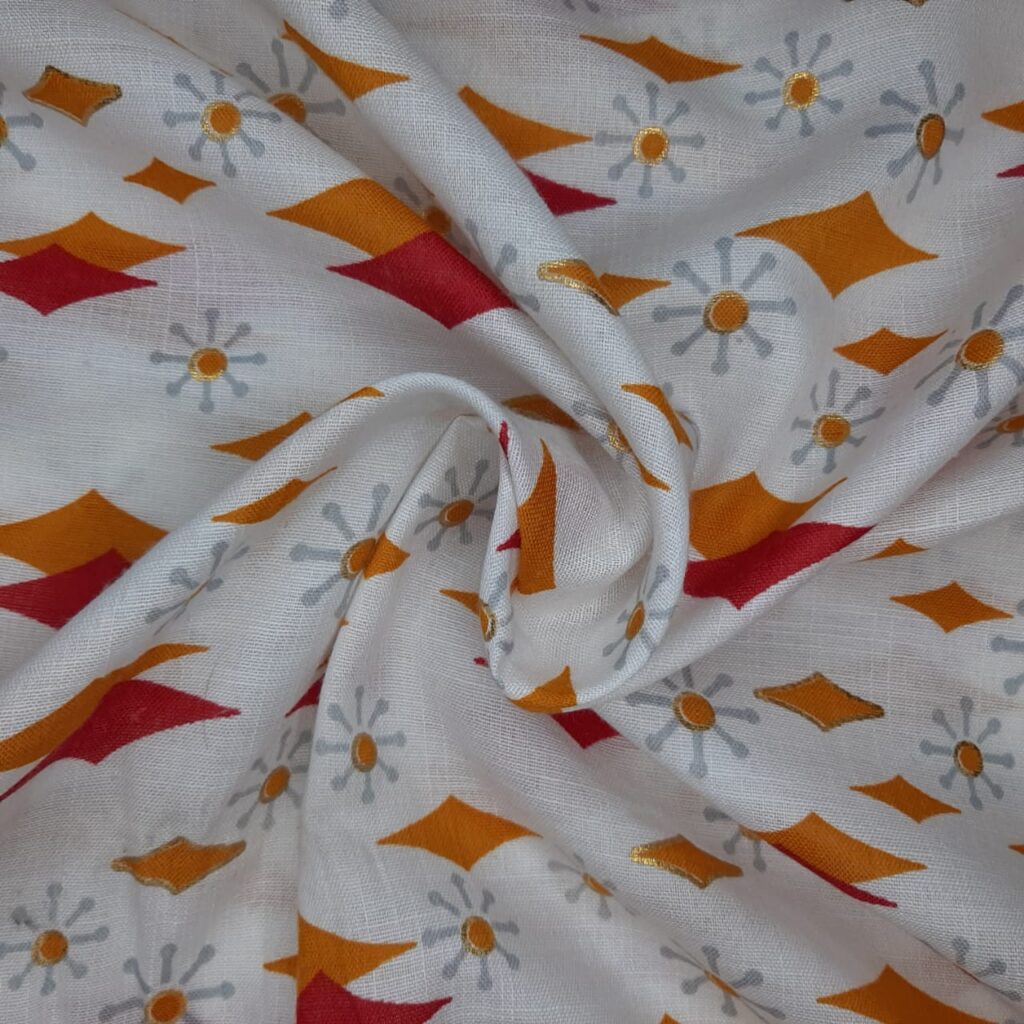
- Foil print: metallic accents pressed onto the fabric; needs gentle care.
Caring for pure cotton
- Pre-wash before stitching; cotton can shrink 3 to 5 percent.
- Machine wash on gentle with cold or lukewarm water; wash dark colours separately at first.
- Dry in the shade to keep colours bright.
- Iron on medium to high heat while slightly damp for a crisp finish.
Frequently asked questions
Is 100% cotton better than a cotton blend?
For breathability and comfort in heat, yes. Blends are better if you want fewer wrinkles and less shrinkage. It depends on how you will wear it.
Why does pure cotton cost more?
Good-quality cotton yarn, especially finer counts, costs more than polyester, and pure cotton fabrics need more careful finishing.
Does pure cotton fade?
Dark colours can fade slowly with sun and harsh detergents. Wash inside out in cold water and dry in the shade.
Is cotton good for winter too?
Yes. Heavier cotton weaves such as twill, flannel and thick khadi are comfortable in mild Indian winters, and cotton layers well under shawls and jackets.
Why does my cotton kurti feel stiff after washing?
Hard water and drying in strong sun can make cotton feel stiff. Use a mild detergent, rinse well, dry in the shade and iron while slightly damp to bring back the softness.
Is handloom cotton better than mill-made cotton?
Not necessarily better, but different. Handloom cotton has a slightly uneven, textured character and supports weavers, while mill-made cotton is more uniform and usually more affordable.
Shop our 100% Cotton collection. Every product lists its exact composition, and you can always ask us on WhatsApp for a close-up video before you buy.