Embroidered Fabric Guide: Chikankari, Zari, Mirror Work and More
Embroidery turns a simple fabric into a statement. India has some of the richest embroidery traditions in the world, from delicate Lucknowi chikankari to glittering zardozi. Buying embroidered fabric lets you create festive outfits in your own design and fit, often for much less than a ready-made. Here is a guide to the main styles, how to judge quality and how to make the most of embroidered fabric.
Popular types of Indian embroidery
| Embroidery | Where it comes from | What it looks like |
|---|---|---|
| Chikankari | Lucknow | Delicate white or tonal thread work, including shadow work, on light fabrics like cotton and georgette |
| Zari and zardozi | Lucknow, Agra, Varanasi and others | Metallic gold or silver thread, often with beads and stones; rich and festive |
| Aari work | Kashmir, Gujarat and others | Fine chain stitches made with a hooked needle; dense, detailed motifs |
| Mirror (shisha) work | Gujarat and Rajasthan | Small mirrors stitched in with colourful thread; playful and bright |
| Phulkari | Punjab | Bold floral patterns in bright silk-floss thread |
| Kantha | West Bengal | Running-stitch embroidery with a soft, hand-made look |
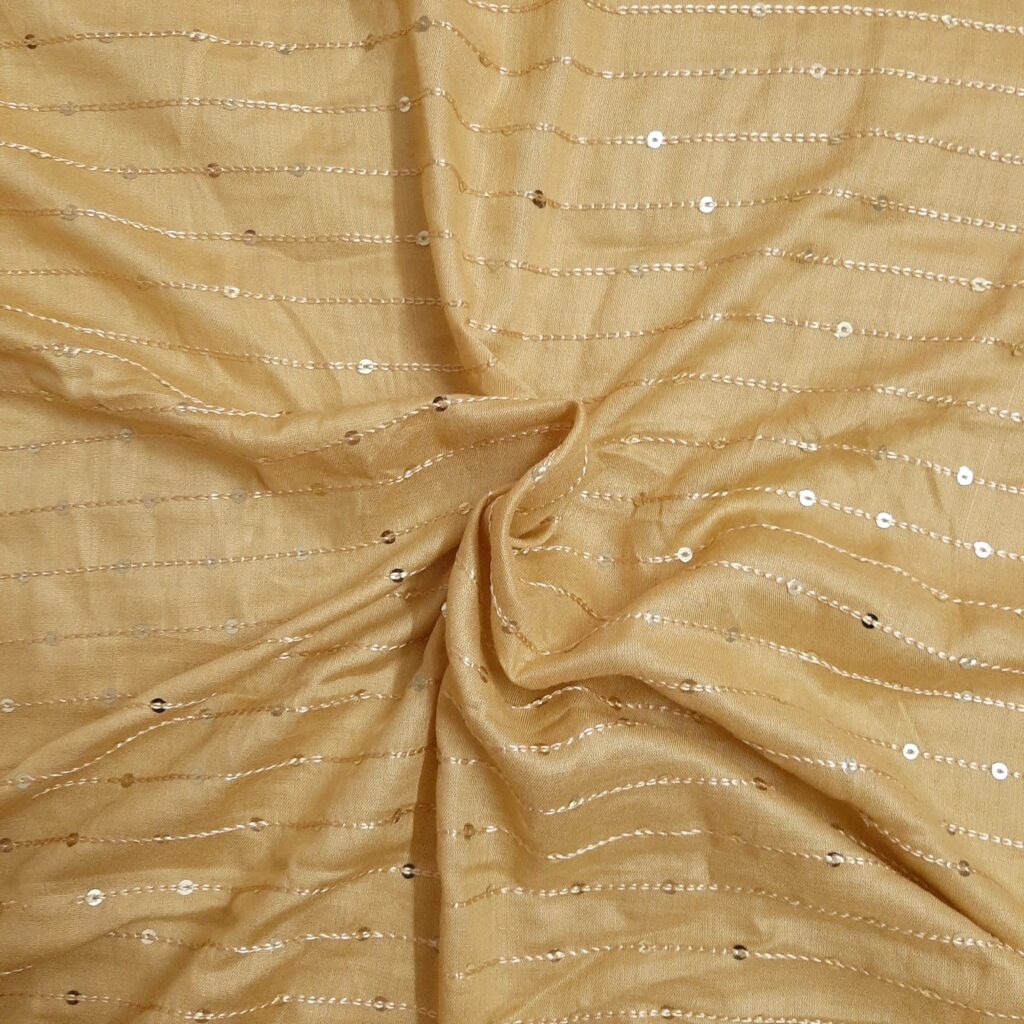
| Sequin work | Across India | Sequins stitched in patterns or all-over for shimmer |
| Schiffli and machine embroidery | Factory made | Even, repeating designs, often with cut-work or eyelets; affordable |
Hand vs machine embroidery
Hand embroidery has small irregularities, a softer raised feel and a higher price because of the hours involved. Machine embroidery is perfectly uniform, faster and more affordable, and modern machines produce very fine work. Both are good choices; just make sure the listing tells you which one you are buying.
Types of embroidered fabric layouts
- All-over (jaal): embroidery covers the whole fabric. Easy to cut and use for any design.
- Border: embroidery runs along one or both edges. Great for hemlines, sleeves and dupattas.
- Panel or yoke: a placed motif for the neckline or front. Check the measurements against your design.
- Butti: small scattered motifs. Subtle and versatile.
How to judge embroidered fabric quality
- Check the back: neat backs with secured thread ends last longer. Long loose floats snag easily.
- Thread density: denser stitching looks richer and wears better.
- Base fabric: the embroidery should not pucker or pull the fabric.
- Zari finish: it should shine evenly without flaking.
- Sequins and mirrors: they should be firmly attached, without loose ends.
- Placement: for panels or borders, check that the layout suits your design.
What affects the price?
- Hand work costs more than machine work because of the hours involved.
- Denser and larger embroidery areas take longer.
- Metallic zari, beads and stones add material cost.
- The base fabric matters: silk and georgette cost more than cotton.
Embroidery by occasion
| Occasion | Good choices |
|---|---|
| Office and daily | Light chikankari or thread work on cotton |
| Haldi and mehndi | Mirror work, colourful thread work, phulkari |
| Sangeet and parties | Sequin work, aari with sequins |
| Wedding and reception | Zari, zardozi, heavy aari work |
Popular base fabrics for embroidery
- Georgette: light and flowing, perfect for chikankari and sequins. See our georgette guide.
- Cotton: breathable, ideal for everyday chikankari and thread work.
- Silk and brocade blends: for zari and zardozi on wedding wear. See our brocade guide.
- Rayon and viscose: soft drape with mirror and sequin work.
Styling tips
- Pair a heavily embroidered top with a plain bottom and dupatta to keep the look balanced.
- Use an embroidered border fabric to finish the hem and sleeves of a plain kurta.
- Match thread colours in your accessories to tie the outfit together.
Planning an outfit with embroidered fabric
- Decide the focus: choose whether the embroidery will be on the yoke, the whole kurta, the dupatta or the border.
- Measure the work: check the embroidered area against your design, especially for panels and borders.
- Choose plain partners: pick a solid bottom and lining in a shade that matches the base fabric or thread colour.
- Plan the lining: embroidered georgette and net almost always need a soft lining.
- Brief your tailor: show them where motifs should sit, so the best part of the work is not lost in seams.
Common mistakes to avoid
- Cutting through the middle of a large motif. Plan the layout first.
- Pairing heavy embroidery with another busy print, which looks cluttered.
- Ironing on the face side, which flattens threads and can damage sequins.
- Storing embroidered outfits in plastic for long periods, which traps moisture.
Caring for embroidered fabric
- Dry clean heavy zari, zardozi and sequin work.
- Hand wash light thread embroidery inside out in cold water.
- Never iron directly on embroidery; iron on the reverse with a towel underneath.
- Store folded with tissue between folds to protect the work.
Frequently asked questions
Is embroidered fabric good for a wedding?
Yes. Zari, zardozi and sequin embroidery are wedding favourites; chikankari and thread work suit day functions and haldi or mehndi.
How much embroidered fabric do I need?
It depends on whether the embroidery is all-over or a panel. Use our metre guide or WhatsApp us your design.
Will the embroidery scratch?
Metallic zari and sequins can feel rough on the inside. A soft cotton lining solves this.
Does hand embroidery last longer than machine embroidery?
Not automatically. Durability depends on stitch density, thread quality and how securely the ends are finished. Well-made machine embroidery can last as long as hand work; loose, sparse work of either kind wears out faster.
Can I add embroidery to a plain fabric later?
Yes. Many tailors and local karigars can add borders, butti or yoke work to plain fabric. Choose a stable base fabric, as very thin georgette or chiffon may pucker under dense work.
Discover our Embroidered collection for festive fabrics with clear close-up photos of the work.